
Publishing dissertations

What Determines If Your Dissertation Gets Published?

A dissertation is a monumental academic milestone. After investing so much time and effort, it’s natural to wonder if your work has potential for publication. Here’s the breakdown of the most common questions to understand if your thesis can be published as a book.

Can all dissertations be published?

The short answer is no, not all dissertations get published. Dissertations often fulfill degree requirements and focus on a comprehensive exploration of your chosen field – not necessarily on a format designed for immediate publication. However, many dissertations possess valuable research that can be adapted for publication.

Can you publish your undergraduate dissertation?

While publishing undergraduate dissertations is less common than publishing graduate dissertations, it’s possible. Some universities offer programs or platforms to support undergraduate publication in academic journals, conferences, or online repositories.

When PhD dissertations are considered ‘published’?

Important to note that a PhD dissertation is not the same as a Master’s thesis. PhD work requires original research and makes a unique contribution to the field.

Dissertations become “published” in a 3 ways:

  1. Institutional Repositories: Many universities require digital submission of dissertations to online databases, making them discoverable for researchers and other scholars.
  2. Academic Journals: Research from your dissertation can be adapted into one or more articles for submission to peer-reviewed journals in your field.
  3. Book Publications: In some disciplines, like history, dissertations may be revised and expanded into full-length monographs.

Key Details That Help Dissertations Get Published

Clear Distinction Between Archiving and Publishing

Making a dissertation available in a university repository ensures preservation and access, but it does not constitute academic book publishing. Search engines and academic systems distinguish between archived research and publisher-mediated books based on editorial involvement, ISBN registration, and distribution.

Substantive Revision for Book Readiness

Dissertations must be substantially revised before publication. This includes structural reorganization, length reduction, and a shift from examiner-oriented writing to reader-focused scholarly discourse. These revisions align the work with the expectations of an academic monograph rather than an assessment document.

Academic Positioning and Scholarly Context

For a dissertation to be publishable as a book, it must be clearly positioned within the existing academic literature. This involves strengthening the theoretical framework, clarifying the contribution to the field, and situating the research within ongoing scholarly debates.

Selection of an Appropriate Academic Publisher

Dissertations that become books are typically published by academic publishers specializing in doctoral research. Publishers such as Lambert Academic Publishing focus on transforming revised PhD dissertations into academic books by integrating them into international book distribution systems and academic library networks.

ISBN Assignment and Global Distribution

Academic book publication requires formal identifiers such as ISBNs and inclusion in global book trade and library databases. These elements differentiate a published academic book from a repository-hosted dissertation.


Embargo Management and Publishing Rights

Authors may place embargoes on dissertations to delay public access while preparing the work for publication. Even when a dissertation is publicly accessible, it can still be published as a book if it has been meaningfully revised and repositioned for academic readership.

Can I make money by publishing my dissertation?

Monetary gain from dissertation publication shouldn’t be the primary expectation. However, it can lead to:

1. Royalties (Book Publications): Income can be generated if your revised dissertation is published as a book. Sales volume ultimately determines potential royalties. 

For example, if you follow the steps on how to publish with Lambert Academic Publishing and manage to reach the publication step. LAP operates on a transparent and equitable author royalty system. As an author, you stand to gain a noteworthy 12% in royalties for each copy sold and paid for. 

2. Career Advancement: Publication enhances your reputation and visibility in your field, potentially opening doors to grants, job offers, and other financially beneficial opportunities.

Is there a reason why I shouldn’t publish my dissertation?

Consider these factors before pursuing publication:

  • Confidentiality: Sensitive data in your research might be best left unpublished.
  • Future Research Plans: Publication may hinder further investigation if you intend to build on your dissertation work.
  • Quality: If you have doubts about the caliber of your research, take time to address these concerns before publication.
  • Career Goals: If your career path isn’t heavily research-focused, publication may not be as critical.

Whether or not you consider publishing your dissertation traditionally, the value of your research goes beyond the degree itself. Sharing your findings can make a meaningful impact on your field, even if it’s initially through accessible repositories.

For those interested in exploring the possibility of publication, services like Lambert Academic Publishing provide options specifically geared toward dissertations. It’s important to compare their terms and services to other publishers to ensure the best fit for your work and goals.

Ultimately, the decision to publish rests with you. By carefully considering the benefits, potential drawbacks, and your own academic aspirations, you can determine the path that best showcases your hard-earned research contributions.

What Determines If Your Dissertation Gets Published? Read More »

How To Become a Successful Published Author: 5 Tips

Becoming a published author means having your work released to the public, which can happen through traditional, self, hybrid, or academic publishing. The journey involves writing a strong manuscript, thorough editing, seeking feedback, choosing a publishing path, and consistent marketing. 

To succeed, authors should overcome imposter syndrome, continuously sharpen their writing talent, build a strong online presence, understand the business aspects of publishing, and persist despite rejection. 

Key tips include crafting a strong manuscript, seeking professional feedback, and strategically marketing your work. Publishing your thesis online or in academic journals can also significantly help establish expertise.

What Does “Published Author” Mean?

A published author is someone who has had their work made available to the public. 

This can take many forms:

  • Traditional Publishing: Your book is accepted by a publishing house that handles editing, production, distribution, and marketing.
  • Self-Publishing: You manage the entire publishing process yourself, using platforms like Amazon Kindle Direct Publishing or IngramSpark.
  • Hybrid Publishing: A blend of traditional and self-publishing, where you might pay for certain services,like editing or design, while retaining more control.
  • Academic Publishing: For researchers and scholars, this involves submitting your thesis or articles to scholarly journals.

How to Become a Published Author?

Becoming a published author is a multifaceted journey, but certain key steps are essential for success. 

The steps to publishing a book vary depending on your chosen path. In general, you’ll need to:

  1. Write a strong manuscript.
  2. Edit and revise thoroughly.
  3. Seek feedback from beta readers or a professional editor.
  4. Choose your publishing route – traditional, self-publishing, or hybrid).
  5. If traditional, submit your manuscript to agents and publishers.
  6. If self-publishing, format your book and upload it to a platform.
  7. Market your book and build an author platform.

5 Tips of Becoming a Successful Published Author

1. Overcome Imposter Syndrome

Imposter syndrome as a writer is common. You might doubt your abilities or feel like you don’t belong in the publishing world. To overcome this, celebrate your wins, focus on learning and growth, and remind yourself that everyone starts somewhere.

2. Sharp Your Talent

Successful authors never stop learning. Take writing courses, attend workshops, and read widely in your genre. The more you practice, the better your writing will become.

3. Build a Presence

Your author platform is your online presence. Create a website or blog, build a social media following, and engage with readers. This helps you establish your brand and connect with potential fans.

While traditional publishers handle some marketing, even self-published authors need to promote their books. Utilize social media, email marketing, and paid advertising to reach your target audience. Consider offering your book for free on certain platforms to gain exposure.

4. Learn the Business

Publishing is a business, so understand the basics. Research contracts, book royalty rates, and marketing strategies. If self-publishing, learn about formatting, cover design, and online distribution.

5. Don’t Give Up

Rejection is a part of the publishing process, even for successful authors. Keep writing, submitting, and promoting your work. Persistence is key.

Becoming a published author takes dedication and hard work, but it’s achievable with the right approach. Whether you choose to publish your book traditionally or opt for the self-publishing route, remember the importance of publishing your work to share your unique voice with the world.

Don’t overlook the importance of publishing your thesis online or submitting your thesis to academic journals. This can be a great way to establish yourself as an expert in your field.

How To Become a Successful Published Author: 5 Tips Read More »

Best-Selling Academic Fields for Master’s Theses That Sell Books

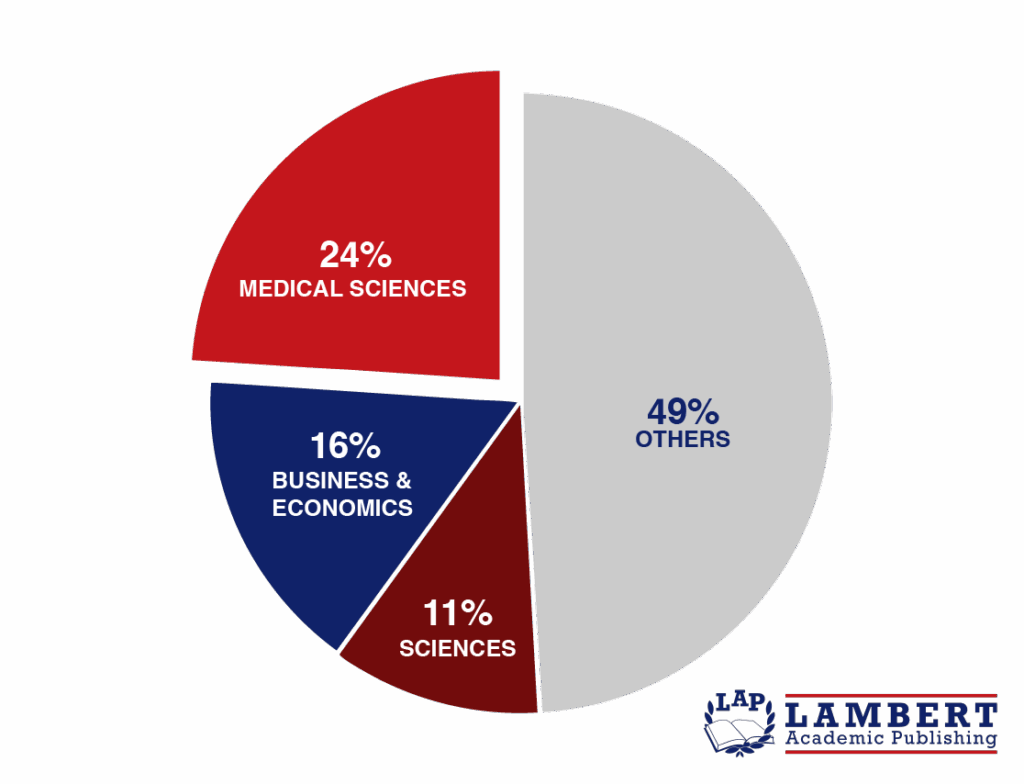
Publishing your master’s thesis as a book is an exciting opportunity, but not every thesis has the potential to sell. If you’re looking to enter the world of academic publishing and earn visibility (or maybe even income), choosing a marketable thesis topic is key. Based on Lambert Academic Research, the best-selling academic fields for Master’s theses that sell books are Medical Sciences, Business & Economics, and Sciences.Let’s explore what makes them so marketable.

Why Some Master Theses Get Published and Others Don’t?

Not all master’s theses make it to the bookshelf—and there’s a good reason why. Based on Lambert Academic Publishing’s experience, here are three common reasons why manuscripts get rejected:

1.Lack of Originality

If your work is heavily derivative, copied, or generated by AI with no critical engagement, it will not meet the standard. Originality is non-negotiable in academic publishing.

2. Poor Relevance to

Market Demand Even well-written theses can be too narrow or outdated. Publishers seek works that align with current academic trends or address real-world issues.

3. Inadequate Academic Rigour or Presentation

Just because you passed your program doesn’t mean your thesis is ready for the public. It must be well-structured, properly cited, and thoroughly edited.

Simply submitting your thesis to a publisher doesn’t guarantee success. Even if accepted, without a compelling subject and market demand, your thesis will not sell.

Top 3 Academic Fields That Drive Book Sales

When it comes to master’s thesis topics that sell, choosing the right academic field plays a crucial role. Here you can find academic book topics that sell, based in our tops:

  1. Medical Sciences – 24%

Medical-related theses top the chart. Topics such as mental health, public health policy, epidemiology, and healthcare management continue to be strong sellers. 

Their relevance to society and interest from both academic and healthcare institutions make them highly marketable.

  1. Business & Economics – 16%

Theses on leadership, strategic planning, innovation, and digital transformation continue to attract both academic and professional readership. 

These topics are often cross-listed in MBA reading lists and business case libraries.

  1. Sciences – 11%

Fields such as environmental science, technology, and applied physics hold consistent value, particularly when they explore solutions to real-world challenges like climate change, AI integration, or sustainability.

  1. Other Disciplines – 49%

While nearly half of the published theses fall outside the top three categories, this includes a wide range of fields—from education, social sciences, law, arts, to interdisciplinary studies. This proves that niche or emerging topics still hold publishing potential if they meet market needs.

3 Tips on How to Choose a Marketable Thesis Topic

Choosing the right thesis topic is not just about academic interest—it’s about positioning your research in a way that sells. Here’s how:

1. Align with Market Demand

  • Research current trends: use Google Scholar, Library Journal’s bestseller lists, and online bookstores.
  • Ask: Would this topic interest a non-specialist in the field?

2. Use AI Tools to Spark Ideas

  • Tools like ChatGPT or Elicit can help you brainstorm topic clusters or refine your research question.
  • Example prompt:
    “Suggest five interdisciplinary master’s thesis topics in psychology and education that are relevant to current global challenges.”

3. Focus on Practical Application

  • Marketable theses often solve real problems.
  • If your work can contribute to policy, reform, or industry practice, you’ve got a potential winner.

How Much Money Can You Make from Academic Books?

Let’s be realistic: academic publishing is rarely a gold mine. On average, most authors make a modest income from book sales. However, there are valuable non-financial benefits, such as:

  • Career visibility: Your name appears in international databases and libraries.
  • Citations: Increases your academic influence.
  • Credibility: Demonstrates initiative and professional polish.
  • Networking: Can lead to conferences, research partnerships, or doctoral opportunities.

Think of it as an investment in your long-term academic and professional brand.

Why Publish Your Master’s Thesis with Lambert Academic Publishing?

Publishing with Lambert Academic Publishing (LAP) is a low-barrier, author-friendly route to turning your thesis into a book.

What Sets Lambert Academic Publishing (LAP) Apart?

  • Your Thesis Grade Doesn’t Define Its Potential: Just because your master’s thesis didn’t receive top marks doesn’t mean it isn’t worthy of publication. A solid idea, clear structure, and relevant topic can still make it a strong candidate for academic publishing—what matters most is its originality, clarity, and contribution to the field.
  • Easy Submission Process: Submit your thesis in minutes with no upfront payment or complicated contract negotiations.
  • Free Academic Publishing: No printing fees, no submission charges. Ideal for first-time authors or students with limited budgets.
  • Support for First-Time Authors: From formatting to cover design and ISBN registration, we guide you through every step.
  • Eco-Friendly Print-on-Demand: With sustainability in mind, we use POD printing, which reduces waste and carbon footprint.

Turning your thesis into a book is more than a personal achievement, it’s a smart move toward building your academic and professional identity. Focus on marketable thesis topics, explore best-selling academic fields, and choose a publishing partner that supports your goals.

Ready to share your research with the world? 

Explore publishing options with Lambert Academic Publishing.

Best-Selling Academic Fields for Master’s Theses That Sell Books Read More »

Do I Need Permission to Publish My Thesis as a Book?

Whether you need permission to publish your thesis as a book depends on several important factors such as:

  • your university’s copyright policies;
  • any prior publications;
  • and whether your thesis includes copyrighted or third-party materials. 

If you’re planning to turn your thesis into a book, it’s essential to understand the legal considerations involved in the academic publishing process.

Why Is Permission Needed to Publish Your Thesis as a Book?

The need for permission stems from the distinction between academic copyright and book publishing rights. While you typically hold the copyright to your thesis, institutions sometimes retain rights, particularly if the thesis is part of a funded project or includes previously published material.

Here’s how the academic copyright and book publishing rights differ. 

  • Copyright for theses usually belongs to the author unless otherwise stated. However, universities might require you to deposit your thesis in an open-access repository, which may affect commercial publishing.
  • Book publishing rights involve granting a publisher the license to reproduce, distribute, and sell your work, which may require clearing previous rights.

If your thesis contains:

  • excerpts from published journal articles;
  • images, data, or graphs from third-party sources;
  • co-authored chapters

…then you’ll likely need copyright permission from the original publishers or contributors before publishing it as a book.

When You DON’T NEED Permission to Publish Your Thesis as a Book

You may not need permission if:

  • You own full copyright of the thesis.
  • The thesis hasn’t been published elsewhere.
  • No third-party content is included without a license.
  • Your university does not claim publishing rights or impose restrictions.

Always check your university’s intellectual property in academic publishing policies and ensure no prior agreements limit your ability to publish commercially.

How Do I Get Permission to Publish?

The permissions process involves 5 simple steps:

  1. Determine if permission is needed
    Review your thesis for any third-party content or previous publications.
  2. Identify the owner
    Find out who owns the rights to any copyrighted materials—this could be a journal publisher, your co-author, or an image database.
  3. Identify the rights needed
    Specify whether you need permission for re-use in a book, online publication, or both.
  4. Contact the owner and negotiate whether payment is required
    Use the publisher’s website or rights management system. Be clear and professional in your request.
  5. Get your permission agreement in writing
    Always obtain a formal license or email approval to avoid legal issues later.

Can I Publish My PhD Thesis as a Book?

Yes, you can publish your PhD thesis as a book . Many academic authors do so, especially when seeking to expand their audience beyond academic databases. 

Explore the different options for publishing your thesis as a book depending on your goals—whether it’s wide distribution, niche readership, or cost-efficiency.

How to Get Copyright Permission From a Journal?

Source: University Of Pittsburgh

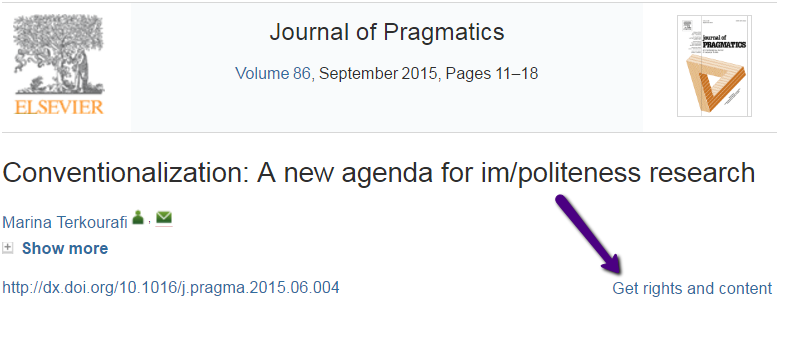
To get copyright permission from a journal, look for a link on the article’s abstract page,often labeled “Get rights and content” or something similar. 

This link usually redirects you to the Copyright Clearance Center, where you can request permission by filling out basic information.

  • Select the type of use (e.g., book chapter).
  • Enter basic publication information.
  • Pay any applicable fees.
  • Download your license for safekeeping.

This system makes it easier to repurpose your academic work legally.

What Happens if You Publish Your Thesis with Lambert Academic Publishing?

At Lambert Academic Publishing, we make it easy for authors to take the next step and publish their thesis as a book. Our process allows you to submit your book’s manuscript without the hassle of upfront publishing fees. 

We specialize in print-on-demand publishing, which ensures cost-effective global distribution and eliminates the need for large print runs or inventory.

We believe in giving authors the opportunity to share their academic work with a wider audience, professionally and efficiently. 

Before publishing, we encourage all authors to carefully review the publishing agreement to fully understand the rights and responsibilities involved.

Do I Need Permission to Publish My Thesis as a Book? Read More »

7 Most Common Self-Publishing Mistakes Authors Make

Self-publishing can seem like a straightforward route for scholars looking to share their work. However, the journey to publish a successful academic book is filled with potential pitfalls. 

Academic authors face unique challenges that general self-publishers often don’t encounter. In this article, we explore the common self-publishing mistakes academic authors make—and how to avoid them.

Whether you’re navigating the academic publishing process or wondering how to publish your research as a book, steering clear of these errors can help ensure your work is both credible and widely read.

Mistake 1: Publishing a Dissertation Without Reworking It Into a Book

While it’s tempting to publish your master thesis or PhD dissertation as-is, doing so is a misstep. A dissertation is written for academic examiners—not a wider audience.

Why It’s a Mistake:

  • Audience mismatch: A dissertation targets a narrow academic panel; a book needs broader appeal.
  • A dissertation is typically dense and formal. Books require accessible language, logical flow, and often, a more engaging structure.
  • Your dissertation proves scholarly merit. Your book should provide insight, stimulate discussion, or educate.

To avoid this mistake, transform your dissertation into a book with new framing, refined arguments, and a more engaging structure. Learn about academic publishing process and avoid key errors already in the beginning.

Mistake 2: Skipping Professional Editing in Academic Self-Publishing

Editing is not optional—it’s essential. Skipping professional editing is one of the biggest common self-publishing mistakes.

Why It’s a Mistake:

  • Reader trust: In academic writing, clarity, logic, and grammar are paramount. Mistakes erode credibility.
  • Depth and structure: Developmental editing can improve argument flow, coherence, and formatting—all crucial in academic publishing.

You wouldn’t submit a journal article without revisions; don’t do it with your book either. Invest in a qualified editor, preferably one with experience in academic texts.

Mistake 3: Poor Formatting and Cover Design for Academic Books

Think formatting doesn’t matter? Think again. Academic book formatting and academic book design are as important as content.

Why It’s a Mistake:

  • Credibility: A poorly formatted book looks unprofessional and can distract readers.
  • Essential elements: Proper formatting includes ISBN registration, a table of contents, consistent citations, and even an index—all details that Lambert Academic Publishing (LAP) handles professionally.

Never underestimate the visual presentation. Your book’s design speaks before the content does.

Mistake 4: Choosing the Wrong Platform for Academic Self-Publishing

Choosing the right academic self-publishing platform is critical. Generic platforms like Amazon KDP are not tailored for scholarly work.

Why It’s a Mistake:

  • Limited academic credibility: Readers and libraries may not take the book seriously.
  • Distribution mismatch: Academic audiences often rely on institutional networks and catalogs.

Look for platforms that understand where to publish academic books and offer long-term visibility—Lambert Academic Publishing, for instance, specialises in this niche.

Mistake 5: Not Promoting Your Self-Published Academic Book

Many authors believe “if I publish it, they will come.” Unfortunately, without promotion, your work might remain unread.

Why It’s a Mistake:

  • No built-in audience: Unlike traditional publishers, self-publishing platforms rarely market your book.
  • Low discoverability: Without visibility, even the best book can be lost in the void.

To get started, read our full guide on how to do social media and promote your book. From Twitter threads to academic LinkedIn posts, your book needs a voice.

Mistake 6: Ignoring Distribution in Academic Publishing

Distribution goes beyond uploading a PDF. Poor academic book distribution can hinder your reach and impact.

Why It’s a Mistake:

  • Metadata mismanagement: Without the right keywords and indexing, your book is invisible to search engines and library catalogs.
  • No global access: Academic readers around the world need reliable access to your work.

Platforms like Lambert Academic Publishing include detailed metadata, international ISBNs, and widespread availability in their standard process.

Mistake 7: Lack of Long-Term Support After Publishing

Publishing is just the start. Academic books need ongoing support for citations, reprints, updates, and promotion.

Why It’s a Mistake:

  • One-and-done publishing: Most self-publishing platforms don’t provide post-launch services.
  • Longevity matters: Academic books often have a longer shelf-life than commercial titles.

By partnering with an academic publisher like Lambert Academic Publishing, authors benefit from continued visibility and career-aligned support.

How Academic Authors Can Avoid These Self-Publishing Mistakes

word “stop” with child’s hand on dark background

Avoiding these common self-publishing mistakes starts with awareness—and a proactive approach. Here’s a quick checklist:

Academic Author Self-Publishing Checklist

  • Rework your thesis into a reader-friendly book
  • Hire a professional editor experienced in academic writing
  • Invest in proper formatting and cover design
  • Choose a trusted academic publishing platform
  • Promote your book via academic and social media channels
  • Ensure your book has robust distribution and metadata
  • Partner with a publisher that offers post-publication support

What are the negatives of self-publishing for academic authors?

Self-publishing can be rewarding, but it’s also demanding—especially if you dislike marketing. You’ll need to invest time, money, or both to promote your book effectively, which not all academic authors are ready for.

Why do some self-published academic books fail to sell?

A lot of self-published academic books struggle to sell simply because the author didn’t define a clear target audience. Without that, it’s hard to promote or position the book, and often the planning comes too late.

What mistakes do first-time academic authors make?

One of the most common mistakes first-time academic authors make is letting self-doubt take the lead. They wait too long for “perfect.” Another mistake is skipping research into the publishing process and audience.

Is there a better alternative to self-publishing academic work?

Self-publishing offers full creative control and potentially higher royalties, but all the work falls on you. Traditional publishing offers support but less control. Hybrid models offer a strong middle ground.

Looking to avoid these pitfalls and focus on your research instead? Learn more about how Lambert Academic Publishing supports you through the entire academic book publishing process. 

7 Most Common Self-Publishing Mistakes Authors Make Read More »

Self-Publishing vs Traditional vs Hybrid Publishing Guide

What Are the Three Types of Publishing?

The three main types of publishing are traditional publishing, self-publishing, and hybrid publishing. Each method offers unique benefits and challenges, and choosing the right one depends on your goals, budget, and level of creative control. 

Traditional publishing involves working with established publishers who handle editing, design, and distribution but offer less creative control. 

Self-publishing gives authors full control over the process, from production to marketing, but requires upfront investment and effort. 

Hybrid publishing combines aspects of both, providing professional support for a fee while allowing authors more input and control.

Understanding these methods will empower you to make the best decision for your work.

Traditional Publishing, Self-Publishing and Hybrid Publishing Main Differences

Publishing ModelProsCons
Traditional– Professional editing & design
– Wide distribution
– No upfront costs
– Lengthy timelines
– Lower royalties
– Limited creative control
Self-Publishing– Full creative freedom
– Higher royalties
– Faster time to market
– All costs borne by the author
– Marketing challenges
– Limited physical distribution
Hybrid Publishing– Professional support
– Faster process than traditional
– Flexible control
– High upfront costs
– Varied quality of publishers
– Complex royalty structures

Traditional Publishing

What is traditional publishing?

Traditional publishing involves submitting a manuscript to a publishing house. If accepted, the publisher oversees the entire publishing process, including editing, design, and marketing, while the author focuses solely on writing.

Pros of Traditional Publishing

Professional Expertise: Offers access to skilled editors, designers, and marketing professionals who enhance your book’s quality and visibility.

Wider Distribution: Books are distributed through established channels, reaching bookstores, libraries, and online platforms worldwide.

No Upfront Costs: Publishers assume financial risks, covering production, distribution, and marketing expenses.

Cons of Traditional Publishing

Lengthy Process: Getting published can take years, from manuscript submission to distribution.

Less Creative Control: Publishers may alter content, cover designs, or marketing strategies without your input.

Lower Royalties: Authors typically earn 5%–15% book royalties, limiting earnings potential compared to other methods.

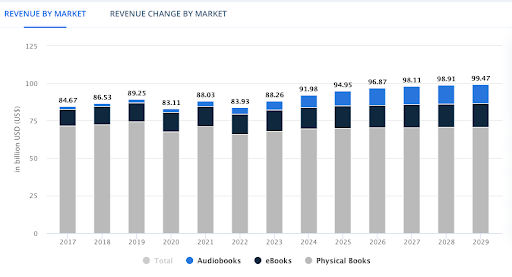
The latest data shows that revenue in the Books market worldwide is projected to reach US$91.98bn in 2024, meaning if you are ready to publish your research there’s a high chance people will buy it!

The latest data shows that revenue in the Books market worldwide is projected to reach US$91.98bn in 2024, meaning if you are ready to publish your research there’s a high chance people will buy it!

Source: Statista Market Insights

Self-Publishing

What is Self-Publishing?


Self-publishing allows authors to maintain complete control over their book’s publishing process, including editing, cover design, pricing, and marketing. Advances in technology and platforms like Amazon Kindle Direct Publishing have made this a popular choice.

Authors who choose this route can retain full ownership of their work and make decisions that align with their creative vision. Let’s discuss the main benefits of self-publishing. 

Pros of Self-Publishing

  • Creative Freedom: Authors retain full ownership and decision-making power over their work.
  • Faster Time to Market: Books can be published quickly, often within weeks.
  • Higher Royalties: Authors earn 35%–70% royalties per sale, significantly higher than traditional publishing.

Cons of Self-Publishing

  • High Costs: Authors bear all expenses, including editing, cover design, and marketing.
  • Limited Distribution: Access to physical bookstores and libraries can be challenging.
  • Marketing Responsibility: Without professional support, authors must manage all marketing efforts.

Did You Know?

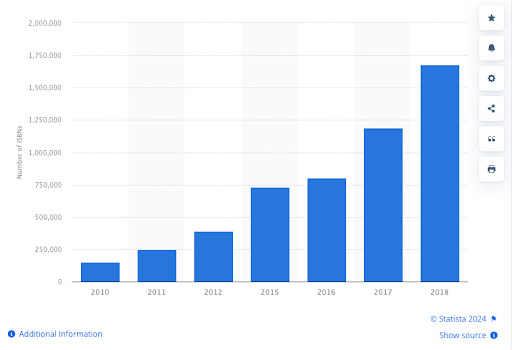
According to Statista, self-publishing accounted for over 1.67 million ISBN (International Standard Book Numbers)-registered books in the U.S. in 2018, demonstrating its growing popularity among authors.

Number of International Standard Book Numbers (ISBNs) assigned to self-published books in the United States from 2010 to 2018.

Source: Statista

Hybrid Publishing

Hybrid publishing combines elements of both traditional and self-publishing. In this model, authors pay for certain services while retaining some control over the publishing process. 

This approach offers a balance between professional support and creative autonomy, appealing to authors who seek both expertise and independence.

Pros of Hybrid Publishing

Shared Expertise: Authors benefit from professional services, such as editing and design, provided by the hybrid publisher. This collaboration ensures a high-quality product while allowing authors to focus on writing. 

Hybrid publishers often have experienced teams that guide authors through the publishing process, offering valuable insights and support.

Flexibility and Control: Authors maintain more control over the creative process compared to traditional publishing, with the support of industry professionals. This flexibility allows authors to retain their artistic vision while benefiting from expert advice. Authors can choose which services to pay for, tailoring the publishing package to their specific needs and budget.

Faster Publication: Hybrid publishing typically offers a quicker path to publication than traditional methods. This speed allows authors to bring their books to market in a timely manner, responding to reader demand and industry trends. 

By streamlining the process, hybrid publishers enable authors to focus on promoting their work and engaging with their audience.

Cons of Hybrid Publishing

Cost: Authors often need to invest upfront, similar to self-publishing, which can be expensive. The costs associated with professional services can add up quickly, requiring authors to carefully budget and plan. While the investment can lead to a high-quality product, it may not be feasible for all authors.

Varied Quality: The quality of hybrid publishers can vary widely, so it’s crucial for authors to research and choose reputable companies. Not all hybrid publishers deliver on their promises, and some may lack the resources or expertise to provide meaningful support. Authors should vet potential partners thoroughly, seeking reviews and recommendations from other authors.

Complex Royalties: The royalty structure can be complex, often falling somewhere between traditional and self-publishing rates. Authors must navigate these agreements carefully to understand their earning potential and financial obligations.

Transparency in royalty agreements is essential to avoid unexpected surprises and ensure fair compensation for the author’s work.

Academic and Open-Access Publishing

For authors in academia, academic publishing and open-access publishing provide additional pathways. These methods focus on making research and scholarly works widely accessible.

Lambert Academic Publishing, for instance, specializes in publishing theses and academic projects with global reach.

Open-access publishing allows authors to share their work freely, increasing visibility among researchers and readers. However, authors often pay article processing charges (APCs) to support free access.

Recent stats show that the global Open Access Journal Publishing market is projected to reach $3.2 billion by 2028, emphasizing its expanding role in the academic publishing industry.

Free AI Tools for Promoting Your Work

Regardless of how you decide to publish your book, promoting it effectively is essential. Free AI tools for promoting your book, like ChatGPT for crafting marketing copy or Canva for designing social media posts, can save time and boost your outreach efforts.

 Leverage these tools to build an audience and engage readers across platforms.

Conclusion

Choosing the right publishing model—traditional, self-publishing, or hybrid—depends on your creative goals, budget, and desired level of involvement in the publishing process. Each method has unique advantages and challenges, so consider your priorities carefully. 

Whether you’re exploring academic publishing, open access, or tools to enhance your book’s visibility, success lies in understanding your audience and delivering a compelling product.

By staying informed and using the right strategies, following publishing trends, you can bring your work to life and ensure it reaches the readers it deserves.

Self-Publishing vs Traditional vs Hybrid Publishing Guide Read More »

How Much Money Can You Make Publishing an Academic Book?

Publishing an academic book can be a rewarding endeavor. But how much money can you actually make from it? The answer isn’t straightforward. It depends on various factors, from your field of study to the publisher you choose.

Understanding Academic Book Publishing Earnings

Academic book publishing is a niche market. It has its own set of financial expectations and norms. Earnings from academic books can vary widely. Factors such as the field of study, publisher, and market demand play a significant role.

Royalties for academic books are typically lower than for trade books. They often range from 10-15%. But remember, these are just averages. Your earnings could be higher or lower depending on your specific circumstances. 

If you publish with Lambert Academic Publishing you are entitled to receive 12% royalties for every sold and paid copy based on the revenue for the publisher. 

In this article, we’ll delve into the complexities of academic book royalties, advances, and the art of negotiating a book contract. We’ll also touch on the role of eco-friendly print-on-demand technologies and global marketing strategies. 

Factors Influencing Academic Book Royalties

Your academic reputation and platform can influence potential earnings. A well-established name in your field can command higher royalties. The potential for cross-disciplinary appeal can also affect earnings. 

Books that resonate with multiple academic fields may sell more copies. The type of publisher matters too. University presses and commercial publishers have different distribution networks and marketing strategies. 

Learn how to promote your book with social media to reach a broader audience and maximize its visibility. Lastly, the target audience for your academic book is crucial. Understanding their needs and interests can help you position your book for success.

The Role of Advances in Academic Publishing

Advances for academic books are generally modest. This reflects the specialized audience and lower sales volumes typical of academic publishing. However, an advance can provide some financial security while you work on your book. 

Remember, the size of the advance can vary and usually, academic publishers won’t do the pre-payment. 

Negotiating Your Academic Book Contract

Negotiating an academic book contract can be a daunting task. It requires a clear understanding of rights, royalties, and other terms. A well-crafted proposal can attract publishers and negotiate better terms. It’s crucial to understand what you’re signing up for.

When negotiating, consider AI tools that can help to create social media posts. These tools can ease your marketing efforts, allowing you to focus more on negotiating your book deal effectively. 

The terms of your contract can significantly impact your earnings, so take the time to understand and negotiate your contract effectively.

The Impact of Print-on-Demand on Earnings and Sustainability

Print-on-demand technologies in academic publishing offer a cost-effective and eco-friendly option. They allow for lower upfront costs and less waste. This technology can positively impact your earnings. It also aligns with the growing trend towards environmental sustainability in the publishing industry.

Global Marketing Strategies for Academic Books

Global marketing strategies can significantly expand the reach and sales of your academic book. It’s about understanding your target audience and tailoring your approach. 

Ideas for writing engaging content are essential when crafting marketing materials or posts to promote your book. Consider digital editions, open access publishing, and translation for international markets. These strategies can boost your academic book publishing earnings.

Earn More by Publishing Your Research with Lambert Academic Publishing

Publishing an academic book is a complex process with many factors influencing your earnings. Understanding these factors, including academic book royalties and marketing tactics like using social media, is key to maximizing your potential income.

Remember, it’s not just about the book sales. Your academic book can open many doors. So choose your publisher wisely. If you have any questions you can always reach us!

How Much Money Can You Make Publishing an Academic Book? Read More »

What are Electronic Thesis (ETD) and Dissertations?

The digital environment has transformed academia, particularly with the rise of Electronic Thesis and Dissertations (ETDs). These digital versions of traditional research papers are revolutionizing how graduate students share their work, researchers access information, and universities preserve knowledge. But what exactly is an electronic thesis and how are they changing the scholarly world? Let’s dive in and explore this evolving academic format.

What is an Electronic Thesis or ETD?

An Electronic Thesis or Dissertation (ETD) is simply a digital version of a graduate student’s research project. Unlike their printed counterparts, ETDs are stored and shared electronically, offering enhanced accessibility, multimedia integration, and easy searchability. They are submitted in fulfillment of academic degrees and are becoming increasingly common due to the numerous advantages they offer over traditional print formats.

What is the Difference Between an Electronic Dissertation and Thesis?

While often used interchangeably, master’s thesis and PHD dissertations traditionally refer to research papers submitted for different academic levels. A master’s thesis usually marks the completion of a master’s degree, while a PhD dissertation signifies the culmination of doctoral studies. Both can be submitted as ETDs, offering the same digital advantages.

Different Types of Electronic Thesis

There are several different types of ETDs, including born-digital ETDs, which are created and submitted in digital format, and digitized ETDs, which are print copies that have been scanned and converted to digital format. Both types of ETDs offer the same benefits and can be uploaded to digital repositories and databases.

1. Born-Digital ETDs

Born-Digital ETDs are created and submitted entirely in digital format. Students use software tools to write, format, and incorporate multimedia elements directly into their ETD.

2. Digitized ETDs

These start as traditional printed theses or dissertations. They are then scanned and converted into digital formats like PDF, making them accessible online.

What are the fundamental changes that ETD caused?

The advent of Electronic Theses and Dissertations (ETDs) has brought about significant changes in the way academic research is conducted and disseminated. Here are 5 of the fundamental changes that ETDs have caused in academia:

1. Increased Accessibility With Electronic Thesis

One of the most significant changes brought about by ETDs is the dramatic increase in accessibility to scholarly research. Unlike printed copies limited to library shelves, electronic theses are available online for anyone with an internet connection to access. This global reach democratizes knowledge and fosters a more connected academic community.

2. ETDs Enhanced Preservation

ETDs also offer superior preservation compared to their physical counterparts. Digital archives protect these valuable works from degradation over time, ensuring they remain accessible to future generations of researchers. This long-term preservation is crucial for the ongoing advancement of knowledge.

3. Improved Searchability

Finding relevant research has become much more efficient with ETDs. Online databases and repositories allow users to search within the full text of electronic theses, making it far easier to pinpoint specific information or related studies. This streamlined search capability accelerates the research process and fosters new connections between scholars.

4. Cost-Effectiveness

With ETDs, there is no need for printing, binding, or shipping costs, which can be substantial for printed theses and dissertations. This has made it easier for universities and research institutions to make research material available to a wider audience, without incurring significant costs.

5. Accelerated Research Process 

ETDs have made the research process faster. With ETDs, the time between the submission of the thesis or dissertation and its availability to the public is significantly reduced. This has made it possible for researchers to access and use the latest research material in real time, allowing for more current and up-to-date research.

Can ETDs Be Published?

Yes! Publishing your electronic thesis is not only possible but encouraged. This allows for greater visibility and potential impact on your research. Additionally, you can publish your thesis online for free

with Lambert Academic Publishing, this can be a great opportunity for those seeking additional publishing opportunities. 

What are Electronic Thesis (ETD) and Dissertations? Read More »

What Happens After You Submit Your PhD Thesis?

Congratulations! You’ve just submitted your PhD thesis, a monumental achievement marking the culmination of years of dedication and research. But what happens after you submit your PhD thesis? The journey doesn’t end there. In fact, a whole new chapter is just beginning, filled with exciting possibilities and important decisions.

First of all it’s important to know that there is a difference between a master thesis and a PhD dissertation. While both can be published, PhD dissertation is expected to make a more significant original contribution to the field, often involving extensive primary and secondary research.

Two Paths After Your PhD

After completing your PhD, you’ll find yourself at a crossroads with two main paths ahead:

1. Publishing Your Research as a Book

The importance of publishing in academia cannot be overstated. Publishing your research findings solidifies your contribution to your field and boosts your academic reputation. One option is to transform your thesis into a book, which can be a significant undertaking. However, it also allows you to delve deeper into your research and reach a wider audience.

Alternatively, you can publish your research in academic journals. This often involves breaking down your thesis into smaller, more focused articles that cater to the specific interests of different journals.

2. Considering Industry vs. Continued Research

The decision of whether to stay in academia or transition to industry is a personal one. Continuing in academia often involves pursuing postdoctoral positions or applying for faculty roles, where research remains a central focus.

On the other hand, many PhD graduates find fulfilling careers in industry, leveraging their expertise and research skills in various sectors. This path often involves adapting your research experience to industry-specific problems and goals.

It’s Okay Not to Publish

While publishing is highly valued in academia, it’s important to remember that it’s not mandatory for everyone to publish. After you submit your PhD thesis, the decision to publish (or not) rests on your individual goals and aspirations. Some graduates might prioritize other career paths, personal projects, or simply taking a well-deserved break.

Legally, the ownership of your PhD thesis depends on your university’s policies and any agreements you’ve signed. In many cases, you retain the copyright of your work, giving you the freedom to publish it or use it as you see fit.

Interestingly, statistics show that not all PhD graduates publish their theses. The publication rate varies depending on the field of study and individual circumstances.

Don’t Forget the Viva!

An essential step after you submit your PhD is the viva voce examination, also known as a thesis defence.

What does PhD Viva mean?

A PhD viva is an oral examination where you defend your research in front of a panel of experts. It’s an opportunity to demonstrate your knowledge, answer questions about your work, and address any concerns raised by the examiners. The format of a viva can vary. Some are more traditional, involving a formal presentation followed by questions, while others are more conversational.

Publish Your Research Paper as a Book with Lambert Academic Publishing!

If you’re looking for a hassle-free way to share your research with the world, consider publishing your PhD thesis as a book with Lambert Academic Publishing. Lambert offers a unique platform for academics to showcase their work with:

  • Zero fees for authors: You can publish your research without any fees.
  • 12% royalty payments: Earn a competitive royalty rate on each book sale.
  • Distribution in 60 countries: Your book will be available to a global audience through major online retailers and academic libraries.

Publish your thesis today!

What Happens After You Submit Your PhD Thesis? Read More »

Maintaining Creative Control When Publishing Your Book

For every author, seeing their book published is a dream come true. But the journey from manuscript to finished product can raise concerns about creative control in book publishing. This article explores the balance between authorial vision and publisher’s expertise, along with steps you can take to safeguard your creative input.

What part of the brain controls creative writing?

Interesting fact – did you know that creative writing is controlled by the prefrontal cortex? This region is responsible for higher-order thinking, including imagination, planning, and emotional regulation. It’s where your unique voice and story come to life!

Hybrid Publishing

Author satisfaction with creative control in traditional publishing is increasing. A 2024 study by the Publishing Research Consortium found 73% of authors felt they had significant influence over the editing and presentation of their work.

How Much Creative Control Do Authors Have Over Their Books?

The level of creative control an author has over their book varies depending on the publishing route chosen.

Traditional publishers offer a wealth of experience in editing, design, and marketing, but this expertise often comes with a trade-off in creative control. Editors may suggest significant changes to improve clarity, pacing, or marketability.

Self-publishing offers the ultimate freedom in shaping your book. You have complete control over the editing process, choosing the level of editing you desire (developmental, copyediting, etc.)

The ideal level of creative control depends on your individual priorities.

  • Do you value editorial expertise and established marketing channels? Traditional publishing may be a good fit.
  • Do you prioritize absolute control over your work and are willing to invest time and effort in editing, design, and marketing? Self-publishing can be the right path.
  • Are you looking for a middle ground, with some editorial guidance and support but still maintaining a significant role in shaping your book? Hybrid publishing could be the answer.

Ultimately, the best publishing route is the one that allows you to achieve your goals while staying true to your creative vision.

How Much Control Does a Publisher Have?

Traditional publishers often hold significant sway over a book’s final form. This can include:

  • Editing and revisions: Editors suggest changes to improve clarity, flow, and marketability.
  • Cover design: Publishers create covers that align with their brand and target audience.
  • Marketing and distribution: Publishers determine how the book is promoted and sold.

4 Steps Authors Can Take to Maintain Creative Control While Publishing

1. Choose the Right Publishing Partner

Research different publishers and understand their editorial style. Look for one that aligns with your genre and respects authorial vision. At Lambert Academic Publishing we believe in the authors’ voice and try to keep it unchanged as much as possible.

2. Negotiate Your Contract Carefully:

Pay close attention to clauses regarding editing, cover design, and marketing. Negotiate for control over aspects that are crucial to your vision.

3. Be Prepared to Advocate

Clearly communicate your vision for the book throughout the publishing process. Be prepared to discuss proposed changes and offer alternatives that align with your goals.

4. Work with a Self-Publishing Service Provider

Self-publishing platforms provide guidance and tools but may offer less editorial control than traditional publishers.

Self-Publishing with Lambert Academic Publishing

While self-publishing offers benefits like higher book royalty rates, it’s not for everyone. Some authors may still find traditional publishing to be the best option, especially for those seeking more benefits of publishing their thesis. Publishers like Lambert Academic Publishing aim to find a middle ground, prioritizing the author’s perspective and feedback, making it an appealing choice for those seeking a balance between creative control and the resources of a traditional publisher. Besides this, LAP offers advantages like:

  • Zero fees for authors
  • 12% royalty payments on book sales
  • Distribution in 60 countries

Do you get paid for publishing an academic book?

Yes, with Self-Publishing, you earn royalties on every book sold. The rates usually depend on the publishing house you choose.

By understanding the dynamics of creative control and taking proactive steps, you can ensure your book reaches the world while staying true to your vision.

Maintaining Creative Control When Publishing Your Book Read More »

Scroll to Top