Diana Boboc

How Much Money Can You Make Publishing an Academic Book?

Publishing an academic book can be a rewarding endeavor. But how much money can you actually make from it? The answer isn’t straightforward. It depends on various factors, from your field of study to the publisher you choose.

Understanding Academic Book Publishing Earnings

Academic book publishing is a niche market. It has its own set of financial expectations and norms. Earnings from academic books can vary widely. Factors such as the field of study, publisher, and market demand play a significant role.

Royalties for academic books are typically lower than for trade books. They often range from 10-15%. But remember, these are just averages. Your earnings could be higher or lower depending on your specific circumstances. 

If you publish with Lambert Academic Publishing you are entitled to receive 12% royalties for every sold and paid copy based on the revenue for the publisher. 

In this article, we’ll delve into the complexities of academic book royalties, advances, and the art of negotiating a book contract. We’ll also touch on the role of eco-friendly print-on-demand technologies and global marketing strategies. 

Factors Influencing Academic Book Royalties

Your academic reputation and platform can influence potential earnings. A well-established name in your field can command higher royalties. The potential for cross-disciplinary appeal can also affect earnings. 

Books that resonate with multiple academic fields may sell more copies. The type of publisher matters too. University presses and commercial publishers have different distribution networks and marketing strategies. 

Learn how to promote your book with social media to reach a broader audience and maximize its visibility. Lastly, the target audience for your academic book is crucial. Understanding their needs and interests can help you position your book for success.

The Role of Advances in Academic Publishing

Advances for academic books are generally modest. This reflects the specialized audience and lower sales volumes typical of academic publishing. However, an advance can provide some financial security while you work on your book. 

Remember, the size of the advance can vary and usually, academic publishers won’t do the pre-payment. 

Negotiating Your Academic Book Contract

Negotiating an academic book contract can be a daunting task. It requires a clear understanding of rights, royalties, and other terms. A well-crafted proposal can attract publishers and negotiate better terms. It’s crucial to understand what you’re signing up for.

When negotiating, consider AI tools that can help to create social media posts. These tools can ease your marketing efforts, allowing you to focus more on negotiating your book deal effectively. 

The terms of your contract can significantly impact your earnings, so take the time to understand and negotiate your contract effectively.

The Impact of Print-on-Demand on Earnings and Sustainability

Print-on-demand technologies in academic publishing offer a cost-effective and eco-friendly option. They allow for lower upfront costs and less waste. This technology can positively impact your earnings. It also aligns with the growing trend towards environmental sustainability in the publishing industry.

Global Marketing Strategies for Academic Books

Global marketing strategies can significantly expand the reach and sales of your academic book. It’s about understanding your target audience and tailoring your approach. 

Ideas for writing engaging content are essential when crafting marketing materials or posts to promote your book. Consider digital editions, open access publishing, and translation for international markets. These strategies can boost your academic book publishing earnings.

Earn More by Publishing Your Research with Lambert Academic Publishing

Publishing an academic book is a complex process with many factors influencing your earnings. Understanding these factors, including academic book royalties and marketing tactics like using social media, is key to maximizing your potential income.

Remember, it’s not just about the book sales. Your academic book can open many doors. So choose your publisher wisely. If you have any questions you can always reach us!

How Much Money Can You Make Publishing an Academic Book? Read More »

What are Electronic Thesis (ETD) and Dissertations?

The digital environment has transformed academia, particularly with the rise of Electronic Thesis and Dissertations (ETDs). These digital versions of traditional research papers are revolutionizing how graduate students share their work, researchers access information, and universities preserve knowledge. But what exactly is an electronic thesis and how are they changing the scholarly world? Let’s dive in and explore this evolving academic format.

What is an Electronic Thesis or ETD?

An Electronic Thesis or Dissertation (ETD) is simply a digital version of a graduate student’s research project. Unlike their printed counterparts, ETDs are stored and shared electronically, offering enhanced accessibility, multimedia integration, and easy searchability. They are submitted in fulfillment of academic degrees and are becoming increasingly common due to the numerous advantages they offer over traditional print formats.

What is the Difference Between an Electronic Dissertation and Thesis?

While often used interchangeably, master’s thesis and PHD dissertations traditionally refer to research papers submitted for different academic levels. A master’s thesis usually marks the completion of a master’s degree, while a PhD dissertation signifies the culmination of doctoral studies. Both can be submitted as ETDs, offering the same digital advantages.

Different Types of Electronic Thesis

There are several different types of ETDs, including born-digital ETDs, which are created and submitted in digital format, and digitized ETDs, which are print copies that have been scanned and converted to digital format. Both types of ETDs offer the same benefits and can be uploaded to digital repositories and databases.

1. Born-Digital ETDs

Born-Digital ETDs are created and submitted entirely in digital format. Students use software tools to write, format, and incorporate multimedia elements directly into their ETD.

2. Digitized ETDs

These start as traditional printed theses or dissertations. They are then scanned and converted into digital formats like PDF, making them accessible online.

What are the fundamental changes that ETD caused?

The advent of Electronic Theses and Dissertations (ETDs) has brought about significant changes in the way academic research is conducted and disseminated. Here are 5 of the fundamental changes that ETDs have caused in academia:

1. Increased Accessibility With Electronic Thesis

One of the most significant changes brought about by ETDs is the dramatic increase in accessibility to scholarly research. Unlike printed copies limited to library shelves, electronic theses are available online for anyone with an internet connection to access. This global reach democratizes knowledge and fosters a more connected academic community.

2. ETDs Enhanced Preservation

ETDs also offer superior preservation compared to their physical counterparts. Digital archives protect these valuable works from degradation over time, ensuring they remain accessible to future generations of researchers. This long-term preservation is crucial for the ongoing advancement of knowledge.

3. Improved Searchability

Finding relevant research has become much more efficient with ETDs. Online databases and repositories allow users to search within the full text of electronic theses, making it far easier to pinpoint specific information or related studies. This streamlined search capability accelerates the research process and fosters new connections between scholars.

4. Cost-Effectiveness

With ETDs, there is no need for printing, binding, or shipping costs, which can be substantial for printed theses and dissertations. This has made it easier for universities and research institutions to make research material available to a wider audience, without incurring significant costs.

5. Accelerated Research Process 

ETDs have made the research process faster. With ETDs, the time between the submission of the thesis or dissertation and its availability to the public is significantly reduced. This has made it possible for researchers to access and use the latest research material in real time, allowing for more current and up-to-date research.

Can ETDs Be Published?

Yes! Publishing your electronic thesis is not only possible but encouraged. This allows for greater visibility and potential impact on your research. Additionally, you can publish your thesis online for free

with Lambert Academic Publishing, this can be a great opportunity for those seeking additional publishing opportunities. 

What are Electronic Thesis (ETD) and Dissertations? Read More »

What Happens After You Submit Your PhD Thesis?

Congratulations! You’ve just submitted your PhD thesis, a monumental achievement marking the culmination of years of dedication and research. But what happens after you submit your PhD thesis? The journey doesn’t end there. In fact, a whole new chapter is just beginning, filled with exciting possibilities and important decisions.

First of all it’s important to know that there is a difference between a master thesis and a PhD dissertation. While both can be published, PhD dissertation is expected to make a more significant original contribution to the field, often involving extensive primary and secondary research.

Two Paths After Your PhD

After completing your PhD, you’ll find yourself at a crossroads with two main paths ahead:

1. Publishing Your Research as a Book

The importance of publishing in academia cannot be overstated. Publishing your research findings solidifies your contribution to your field and boosts your academic reputation. One option is to transform your thesis into a book, which can be a significant undertaking. However, it also allows you to delve deeper into your research and reach a wider audience.

Alternatively, you can publish your research in academic journals. This often involves breaking down your thesis into smaller, more focused articles that cater to the specific interests of different journals.

2. Considering Industry vs. Continued Research

The decision of whether to stay in academia or transition to industry is a personal one. Continuing in academia often involves pursuing postdoctoral positions or applying for faculty roles, where research remains a central focus.

On the other hand, many PhD graduates find fulfilling careers in industry, leveraging their expertise and research skills in various sectors. This path often involves adapting your research experience to industry-specific problems and goals.

It’s Okay Not to Publish

While publishing is highly valued in academia, it’s important to remember that it’s not mandatory for everyone to publish. After you submit your PhD thesis, the decision to publish (or not) rests on your individual goals and aspirations. Some graduates might prioritize other career paths, personal projects, or simply taking a well-deserved break.

Legally, the ownership of your PhD thesis depends on your university’s policies and any agreements you’ve signed. In many cases, you retain the copyright of your work, giving you the freedom to publish it or use it as you see fit.

Interestingly, statistics show that not all PhD graduates publish their theses. The publication rate varies depending on the field of study and individual circumstances.

Don’t Forget the Viva!

An essential step after you submit your PhD is the viva voce examination, also known as a thesis defence.

What does PhD Viva mean?

A PhD viva is an oral examination where you defend your research in front of a panel of experts. It’s an opportunity to demonstrate your knowledge, answer questions about your work, and address any concerns raised by the examiners. The format of a viva can vary. Some are more traditional, involving a formal presentation followed by questions, while others are more conversational.

Publish Your Research Paper as a Book with Lambert Academic Publishing!

If you’re looking for a hassle-free way to share your research with the world, consider publishing your PhD thesis as a book with Lambert Academic Publishing. Lambert offers a unique platform for academics to showcase their work with:

  • Zero fees for authors: You can publish your research without any fees.
  • 12% royalty payments: Earn a competitive royalty rate on each book sale.
  • Distribution in 60 countries: Your book will be available to a global audience through major online retailers and academic libraries.

Publish your thesis today!

What Happens After You Submit Your PhD Thesis? Read More »

Maintaining Creative Control When Publishing Your Book

For every author, seeing their book published is a dream come true. But the journey from manuscript to finished product can raise concerns about creative control in book publishing. This article explores the balance between authorial vision and publisher’s expertise, along with steps you can take to safeguard your creative input.

What part of the brain controls creative writing?

Interesting fact – did you know that creative writing is controlled by the prefrontal cortex? This region is responsible for higher-order thinking, including imagination, planning, and emotional regulation. It’s where your unique voice and story come to life!

Hybrid Publishing

Author satisfaction with creative control in traditional publishing is increasing. A 2024 study by the Publishing Research Consortium found 73% of authors felt they had significant influence over the editing and presentation of their work.

How Much Creative Control Do Authors Have Over Their Books?

The level of creative control an author has over their book varies depending on the publishing route chosen.

Traditional publishers offer a wealth of experience in editing, design, and marketing, but this expertise often comes with a trade-off in creative control. Editors may suggest significant changes to improve clarity, pacing, or marketability.

Self-publishing offers the ultimate freedom in shaping your book. You have complete control over the editing process, choosing the level of editing you desire (developmental, copyediting, etc.)

The ideal level of creative control depends on your individual priorities.

  • Do you value editorial expertise and established marketing channels? Traditional publishing may be a good fit.
  • Do you prioritize absolute control over your work and are willing to invest time and effort in editing, design, and marketing? Self-publishing can be the right path.
  • Are you looking for a middle ground, with some editorial guidance and support but still maintaining a significant role in shaping your book? Hybrid publishing could be the answer.

Ultimately, the best publishing route is the one that allows you to achieve your goals while staying true to your creative vision.

How Much Control Does a Publisher Have?

Traditional publishers often hold significant sway over a book’s final form. This can include:

  • Editing and revisions: Editors suggest changes to improve clarity, flow, and marketability.
  • Cover design: Publishers create covers that align with their brand and target audience.
  • Marketing and distribution: Publishers determine how the book is promoted and sold.

4 Steps Authors Can Take to Maintain Creative Control While Publishing

1. Choose the Right Publishing Partner

Research different publishers and understand their editorial style. Look for one that aligns with your genre and respects authorial vision. At Lambert Academic Publishing we believe in the authors’ voice and try to keep it unchanged as much as possible.

2. Negotiate Your Contract Carefully:

Pay close attention to clauses regarding editing, cover design, and marketing. Negotiate for control over aspects that are crucial to your vision.

3. Be Prepared to Advocate

Clearly communicate your vision for the book throughout the publishing process. Be prepared to discuss proposed changes and offer alternatives that align with your goals.

4. Work with a Self-Publishing Service Provider

Self-publishing platforms provide guidance and tools but may offer less editorial control than traditional publishers.

Self-Publishing with Lambert Academic Publishing

While self-publishing offers benefits like higher book royalty rates, it’s not for everyone. Some authors may still find traditional publishing to be the best option, especially for those seeking more benefits of publishing their thesis. Publishers like Lambert Academic Publishing aim to find a middle ground, prioritizing the author’s perspective and feedback, making it an appealing choice for those seeking a balance between creative control and the resources of a traditional publisher. Besides this, LAP offers advantages like:

  • Zero fees for authors
  • 12% royalty payments on book sales
  • Distribution in 60 countries

Do you get paid for publishing an academic book?

Yes, with Self-Publishing, you earn royalties on every book sold. The rates usually depend on the publishing house you choose.

By understanding the dynamics of creative control and taking proactive steps, you can ensure your book reaches the world while staying true to your vision.

Maintaining Creative Control When Publishing Your Book Read More »

Academic Book Publishing Timeline & Process: Ultimate Guide

How does academic book publishing work?

The academic book publishing process is a complex but rewarding journey for authors seeking to share their research and expertise. Understanding the publishing process includes 7 steps, typically, from the initial concept to holding your published book in your hands. 

Whether you’re exploring how to publish an academic book or seeking a deeper understanding of the publishing process, this comprehensive guide will provide valuable insights into the most important 4 steps and much more.

1. Manuscript Preparation

The first step in the academic book publishing process is manuscript preparation. This involves:

  • Conducting original research
  • Synthesizing existing literature
  • Crafting a comprehensive manuscript

2. Peer Review

Peer review is a crucial stage in the academic publishing process. Your manuscript is evaluated by experts in your field, who provide constructive feedback and recommendations for improvement. This process ensures the quality and relevance of your work, enhancing its value to the academic community.

3. Editing and Production

Once your manuscript has been revised and approved, it undergoes a rigorous editing and production process. A skilled editor will meticulously review your work, ensuring it adheres to the publisher’s standards for formatting, citation style, and language. They will also collaborate with you on the book’s cover design, layout, and other visual elements, making it appealing to readers.

4. Marketing and Distribution

After your book is finalized, the focus shifts to marketing and distribution. Publishers employ various strategies, including book launches, author events, and social media campaigns, to promote your work. They also partner with bookstores, libraries, and online retailers to ensure your book reaches a wide audience.

Academic book publishing timeline

The academic book publishing timeline can vary significantly depending on several factors, including the complexity of your manuscript, the publisher’s schedule, and the peer-review process. On average, the entire process, from manuscript submission to publication, can take anywhere from six months to two years. 

Let’s see below some average timelines for each presented step:

  • Peer Review (2-6 months): The peer review process typically takes between 2 and 6 months, depending on the number of reviewers involved, the complexity of the research, and the length of the manuscript. During this stage, authors must carefully consider and address the feedback provided by the reviewers, making revisions and improvements as necessary to ensure that their work meets the standards and expectations of their intended audience.
  • Editing and Production (6-12 months): the editing and production process typically takes between 6 and 12 months, depending on the complexity of the work and the publisher’s production schedule. During this stage, authors must work closely with their editors to ensure that their work is accurate, clear, and meets the publisher’s quality standards.
  • Marketing and Distribution (3-6 months): The marketing and distribution process typically takes between 3 and 6 months, depending on the publisher’s distribution strategy and the size of the target audience. During this stage, authors may be called upon to participate in book signings, interviews, and other promotional activities to help promote their work and increase its visibility in the marketplace.

The importance of publishing an academic book is in its power to enhance your academic career. It demonstrates your expertise, contributes to your field’s knowledge base, and opens doors to new opportunities. That is why at Lambert Academic Publishing we pride ourselves on a shorter-than-average publishing timeline–become a published author today

What is the Life Cycle of Academic Publishing?

The life cycle of academic publishing extends beyond the initial publication of your book. It encompasses ongoing marketing efforts, potential reprints or new editions, and the continued impact of your work on the academic community. Your book may be adopted as a course textbook, cited in other scholarly works, or spark further research and discussion in your field.

Academic Book Publishing Timeline & Process: Ultimate Guide Read More »

How to Avoid Plagiarism in Your Research Papers?

How to Avoid Plagiarism in Your Research Papers?

Robust research papers build upon the existing body of knowledge. However, to ensure the originality and integrity of your work, it’s crucial to understand and actively avoid plagiarism in research.

What is Plagiarism in Research?

Plagiarism occurs when you present another person’s words, ideas, data, or research findings as your own without proper credit. It undermines the principles of academic publishing and can be a serious case of plagiarism and academic dishonesty. 

Here are 4 the most common types of plagiarism:

  1. Direct Copying: Reproducing text verbatim without quotation marks or correct attribution.
  2. Inadequate Paraphrasing: Only slightly altering the wording of source material without citing the original author.
  3. Mosaic Plagiarism: Patching together phrases and ideas from various sources without proper acknowledgment.
  4. Self-Plagiarism: Reusing significant portions of your own previously published work without clear references.

How much plagiarism is allowed in a research paper?

The ideal amount of plagiarism in a research paper is zero. Every borrowed idea, unique phrasing, or direct quote must be properly cited and attributed. 

Even unintentional plagiarism can lead to serious consequences. Make sure you’ve checked for plagiarism before publishing your research as a book.

Understanding Acceptable Similarities

It’s true that in certain contexts, such as academic writing, there may be instances where text similarities occur without plagiarism. Here’s why:

  • Common Knowledge: Some information is considered common knowledge and may appear in multiple sources without attribution.
  • Quotations: Properly citing and using quotations from other sources is a legitimate way to incorporate existing material into your own work while avoiding plagiarism in academic writing.
  • Paraphrasing: Rephrasing someone else’s ideas in your own words is acceptable as long as you significantly alter the original text AND provide citations.
  • Shared terminology or phrases: In certain fields, specialized terminology may be commonly used. Using this language may result in text similarities, but not plagiarism, when ideas are expressed originally.

Is Plagiarism a Serious Form of Academic Dishonesty?

Yes, plagiarism is a serious breach of academic integrity. It misrepresents the originality of your work and undermines fundamental principles of scholarship. Plagiarism can have severe consequences for students and researchers alike, sometimes even when unintentional.

If you ever decide to publish your work, learning about the importance of publishing in academia is essential to avoid any issues.

5 Tips to Avoid Plagiarism in a Research Paper

1. Understand Plagiarism:

Familiarize yourself with its different forms to actively avoid plagiarism in research.

2. Careful Note-Taking:

Distinguish between your own thoughts and those from your sources.

3. Effective Paraphrasing:

When rephrasing, significantly change the structure and vocabulary. Even paraphrased ideas need citation.

4. Utilize Quotations Responsibly:

Use direct quotes sparingly, primarily when the original wording is important. Always enclose quotes in quotation marks with clear citations.

5. Employ Plagiarism Checkers:

Reputable plagiarism checkers can aid in identifying potential issues before submission, there are some useful tools to avoid plagiarism in research such as:  Grammarly’s Plagiarism Checker, QuillBot and many others.

How to Avoid Plagiarism in Your Research Papers? Read More »

4 Key Benefits of Open Access Publishing for Your Research

The choice of where to publish your research is a crucial decision. One question that often arises is, “Should I publish in an open access journal?” 

Open access academic publishing has gained significant traction in recent years, changing the way research is disseminated. In this article, we’ll explore 4 benefits of publishing your research through open access

What is Open Access Publishing?

Before diving into the benefits, let’s discover what open access publishing means. 

Open access publishing is a model that allows anyone to access and read your research articles online without any cost. It removes the traditional barriers of paywalls and subscription fees, making your work accessible to a global audience.

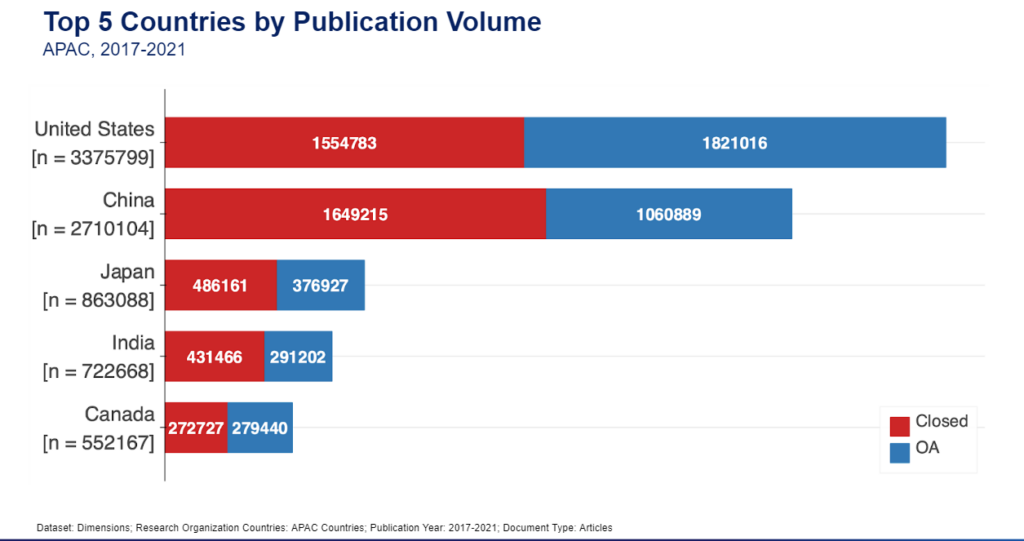
Analysis of publishing trends in research by Professor Michael Khor and Dr. Alana M. Soehartono of Nanyang Technological University (NTU), Singapore, indicates significant growth in open access publishing. In the United States and Canada, there has been significant growth in open access publishing, signifying a shift towards more accessible research, while in Southeast Asia, open access articles have already been the more popular option.

source:www.dimensions.ai

Now, let’s explore the key 4 benefits of open access publishing and how it can positively impact your research career.

1. Increased Visibility and Reach

One of the primary advantages of publishing in open access journals is the increased visibility and reach of your research gains. Your work becomes freely available to researchers, educators, students, and the general public worldwide. This expanded audience can lead to greater recognition of your research and its impact on your field.

2. Quicker Publication Timelines

Traditional publishing can be time-consuming, with lengthy review processes and publication timelines. Open access journals often offer quicker turnaround times, allowing your research findings to reach the academic community and the public more rapidly.

3. Enhanced Impact and Citations

Open access publications are generally more accessible to researchers and the public, increasing the likelihood of citations. This exposure can contribute to your academic and professional reputation, as citations are a vital metric for assessing the impact of research in your field.

4. More Collaboration Opportunities

With open access, researchers can collaborate more easily, as their work is accessible to a wider audience. This can lead to increased opportunities for partnerships, joint projects, and interdisciplinary research, fostering a collaborative academic environment.

Pros and Cons of Open Access Publishing

As you contemplate where to share your valuable research, you may find yourself asking, “Should I publish in an open access journal?” This is a valid question, so let’s compare open access publishing to Lambert Academic Publishing together. This comparison will help you make an informed decision about the best-suited place for your research,

FeatureOpen-Access PublishingLambert Academic Publishing
AccessibilityUnlimited online accessTraditional book distribution channels, including online retailers and libraries
CostTypically involves an article processing chargeAuthors are publishing for free
Design controlAuthors may have greater control of the article design Authors benefit from expert design expertise
SuitabilitySuitable for research articles, conference papers, and other shorter forms of academic workSuitable for comprehensive academic books, theses, and dissertations
VisibilityHigh visibility due to unrestricted access onlineLower visibility due to traditional book distribution channels
Financial Rewards for AuthorsAuthors may have lower opportunities for financial rewards from open-access publications due to publication feesAP offers 12% royalty payments to authors

In conclusion, publishing your research in open access journals offers a multitude of benefits, including increased visibility, quicker publication timelines, enhanced impact, and more collaboration opportunities. 

However, it’s essential to weigh the benefits of open access publishing against potential disadvantages and make an informed decision about the best publishing route for your research. 

At Lambert Academic Publishing, we provide a platform for you to take your research a step further by publishing it as a book. Explore how to publish with us and discover how we can support your research journey.

4 Key Benefits of Open Access Publishing for Your Research Read More »

Unlocking the Benefits of Multilingual Assistance in Academic Publishing

In a world where knowledge knows no boundaries, language barriers have long posed a challenge to academic publishing. According to a 2018 study by the European Commission, over 80% of all scientific papers are published in English, yet this language is the native tongue of only about 5% of the world’s population. This startling fact underscores the urgent need for multilingual assistance in academic publishing as a transformative solution. It’s more than just translation; it’s about building cultural bridges to connect the diverse tapestry of our global audience. In this article, we’ll explore how to tackle this issue head-on, emphasizing the importance of language as a cultural bridge to ensure that knowledge reaches every corner of the globe.

The Multilingual Challenge: A Barrier to Global Knowledge

Academic research is the cornerstone of progress. However, the predominance of English in academic publishing has limited the accessibility of knowledge. Non-native English speakers often face obstacles in accessing and understanding the latest research findings. This linguistic divide threatens to isolate cultures and limit the exchange of ideas.

Multilingual assistance serves as the much-needed bridge that overcomes this linguistic barrier. It’s a comprehensive solution that ensures knowledge remains an inclusive realm:

1 .Cultural Bridging Through Translation

Multilingual assistance begins with translation, but it’s not just about converting words from one language to another. It’s about cultural bridging. Expert translators delve deep into the essence of your research, preserving its significance and meaning in multiple languages.

2. Breaking Down Barriers Through Cultural Adaptation

Cultural adaptation goes beyond translation, seeking to ensure your research remains contextually relevant and meaningful across diverse linguistic backgrounds. It’s about being culturally sensitive, recognizing the nuances that make knowledge accessible to a broader spectrum of readers.

3. Expanding Horizons Through Collaboration

Multilingual publishing doesn’t just extend your readership; it expands your global network. Collaborating with researchers and academics from various linguistic backgrounds enriches your research by bringing together different perspectives. It fosters international collaboration, ensuring academic work is culturally informed.

The Multilingual Revolution

Multilingual publishing democratizes knowledge, transcending the linguistic divide. It allows non-native English speakers to access and engage with research that would otherwise be out of reach. This expansion of accessibility means that knowledge is no longer a privilege reserved for a select few.

Lambert Academic Publishing stands at the forefront of the multilingual assistance in academic publishing. We understand that language is more than a communication tool; it’s a cultural bridge. Our services are designed to help you unlock the full potential of multilingual publishing:

Our team of expert translators specializes in multiple languages, ensuring the precision and cultural relevance of your work. 

Lambert Academic Publishing has established a vast global distribution network, enabling your multilingual publications to reach an extensive international audience.

In the evolving landscape of academic publishing, language should never stand as an obstacle to the exchange of knowledge. Lambert Academic Publishing is committed to tearing down linguistic barriers, embracing cultural diversity, and supporting the globalization of scholarship.

Together, we can unlock the full global potential of scholarly research and transform the way knowledge is shared, transcending the confines of language and culture. See how!

Explore our extensive online library at morebooks.shop, offering a rich collection of books in over 8 languages. 

Unlocking the Benefits of Multilingual Assistance in Academic Publishing Read More »

Exploring the Vital Role of Academic Monograph Publishers in Advancing Scholarly Research

Academic monograph publishers play a crucial role in the dissemination of scholarly research. These publishers are responsible for bringing to light important research in various fields of study, and they serve as a bridge between academics and the wider public. In this article, we will discuss what academic monograph publishers do, their importance in academia, and some of the top academic monograph publishers in the world.

What are Academic Monograph Publishers?

Academic monograph publishers are companies or organizations that specialize in publishing scholarly books, typically written by a single author or a small group of authors, on specific topics or themes within a field of study. These books are typically written in a highly specialized language and provide in-depth analysis and discussion of a particular topic or issue.

The process of publishing a monograph typically involves a peer-review process, in which the author’s work is evaluated by experts in the field to ensure that it meets the high standards of academic scholarship. Once the manuscript is accepted for publication, the publisher takes care of the editing, typesetting, and printing of the book, as well as marketing and distribution to libraries and bookstores.

Academic Books and Their Role

In addition to academic monographs, academic publishers often produce other forms of scholarly literature, such as academic books. These books may cover a broader range of topics and can be authored by multiple contributors. Academic books serve as valuable resources for researchers, educators, and students seeking comprehensive insights into various subjects. Like monographs, academic books also undergo rigorous peer review and uphold high academic standards.

Publishing Models: Traditional vs. Creative Commons

Academic monograph publishers typically follow traditional publishing models, where access to their content is often restricted to those who purchase the books or have institutional access. However, in recent years, there has been a growing movement towards open access publishing, including the use of Creative Commons licenses. These licenses allow authors to retain certain rights while enabling broader public access to their work, fostering greater knowledge sharing and collaboration.

Importance of Academic Monograph Publishers

Academic monographic puplishers play an important role in the world of academia by providing a platform for researchers to share their findings with the wider public. Monographs are a primary means of disseminating new research and ideas, and they are often seen as the gold standard in academic publishing.

For scholars, having a monograph published by a reputable academic publisher can be a significant achievement and can help to establish their reputation and credentials in their field. It can also lead to further opportunities for research and collaboration, as well as job offers and promotions.

For readers, academic monographs are a valuable resource for gaining a deeper understanding of a particular topic or issue. They provide a detailed analysis of the research and the arguments that have been made, and they often include extensive bibliographies that point readers towards further reading on the subject.

Journal Articles and Their Relationship

While academic monographs are a vital component of scholarly publishing, they coexist with journal articles, which are shorter, more focused works often used to report specific research findings or developments. Academic journals and monograph publishers often complement each other, with journals providing a platform for timely dissemination of research, while monographs offer a deeper exploration of topics.

Monograph Titles: A Window into Scholarly Inquiry

Monograph titles play a crucial role in attracting readers and conveying the essence of the research. These titles are carefully crafted to encapsulate the subject matter and significance of the work. They serve as a window into scholarly inquiry, offering a glimpse of the knowledge and insights contained within the pages of the book.

Top Academic Monograph Publishers

There are many academic monograph publishers around the world, each specializing in different fields of study. Some of the top academic monograph publishers include:

  1. Cambridge University Press: Founded in 1534, Cambridge University Press is one of the oldest and most respected academic publishers in the world. The press publishes monographs in a wide range of fields, including the humanities, social sciences, and sciences.
  2. Oxford University Press: Oxford University Press is another prestigious academic publisher with a long history of publishing high-quality monographs. The press publishes books in a wide range of fields, including law, economics, history, and philosophy.
  3. Princeton University Press: Princeton University Press is a leading academic publisher in the fields of humanities and social sciences. The press has a reputation for publishing groundbreaking research and is particularly well-known for its publications in the fields of political science and international relations.
  4. Harvard University Press: Harvard University Press is one of the most well-known academic publishers in the world. The press publishes books in a wide range of fields, including history, philosophy, and literature.
  5. Routledge: Routledge is a global academic publisher that specializes in the social sciences and humanities. The press publishes books on a wide range of topics, including sociology, psychology, and cultural studies.

Conclusion

Academic monograph publishers are an important part of the academic publishing ecosystem. They provide a platform for researchers to share their findings with the wider public, and they play a key role in establishing and disseminating new ideas and research. For scholars, having a monograph published by a reputable academic publisher can be a significant achievement, and for readers, academic monographs are a valuable resource for gaining a deeper understanding of a particular topic or issue.

Ready to Share Your Research with the World?

Lambert Academic Publishing offers a unique opportunity for dedicated researchers like you. With no publishing author fees and a competitive 12% royalty payment, we’re here to support your academic journey. We take your research global, distributing it in over 60 countries, ensuring it reaches a wide audience. Our seamless publishing process, from manuscript submission to distribution, guarantees a hassle-free experience. Your research deserves recognition, and we’re committed to making it happen. Join our community of esteemed authors, and let your insights shine. Start your publishing journey with us today.

Exploring the Vital Role of Academic Monograph Publishers in Advancing Scholarly Research Read More »

Explore Publisher Rankings & Impact of Academic Publishers

If you’re a researcher, professor, or anyone knee-deep in the world of academia, you know the importance of choosing the right publisher for your work. Aligning with a respected publisher can propel your work and enhance your professional reputation. 

That’s where resources like academic publisher rankings come in to help you identify the top academic publishers in your field.

What is the importance of academic publishing?

The academic publishing sphere plays a pivotal role in shaping intellectual discourse, disseminating knowledge, and influencing scholarly conversations. Through academic publishing, researchers and scholars contribute to the collective body of knowledge and establish their standing in the academic community.

1. Publisher Ranking of the Academic Journal Guide (AJG)

The Academic Journal Guide (AJG) Publisher Ranking stands as a noteworthy tool for academics, especially those in business and management. Crafted by the Chartered Association of Business Schools (CABS) in the UK, it assigns star ratings (1 to 4) to publishers based on journal quality within their field.

2. Thomson Reuters Journal Citation Reports (JCR)

Another powerful benchmark for academic publishers ranking is the Thomson Reuters Journal Citation Reports (JCR). It highlights publisher impact by monitoring how often books are cited. This reveals a publisher’s influence in various fields.

3. Lambert Academic Publishing (LAP)

Lambert Academic Publishing (LAP) carves its own niche in the world of academic publishing. It operates as a hybrid, blending aspects of a traditional publisher with an online self-publishing platform. 

Lambert Academic Publishing impact factor is reflected in its commitment to publishing high-quality academic works, contributing to the scholarly landscape

It’s ranking signifies its position as a reputable and impactful player in the academic publishing domain.

4. Other Academic Book Publisher Rankings

Alongside AJG and JCR, a range of organizations offer valuable academic publisher rankings. Consider tools like those from the Association of American University Presses, QS World University Rankings, and Times Higher Education World University Rankings. These resources give further insights when seeking top academic publishers.

Why Is a Book Publisher Important?

1. Expertise and Curation: Established publishers bring expertise and curation to academic works, ensuring high quality and relevance.

2. Global Reach: Publishers help your work reach its target audience with expert promotion strategies.

3. Validation and Impact: A respected publisher lends weight to your research and builds your reputation as a scholar.

Understanding academic publisher rankings is valuable for authors seeking reputable outlets for their work and for readers aiming to find reliable, high-quality scholarship. By using available resources and considering your individual needs, you can make informed decisions about where to publish your master thesis or how to evaluate research sources.

Explore Publisher Rankings & Impact of Academic Publishers Read More »

Scroll to Top